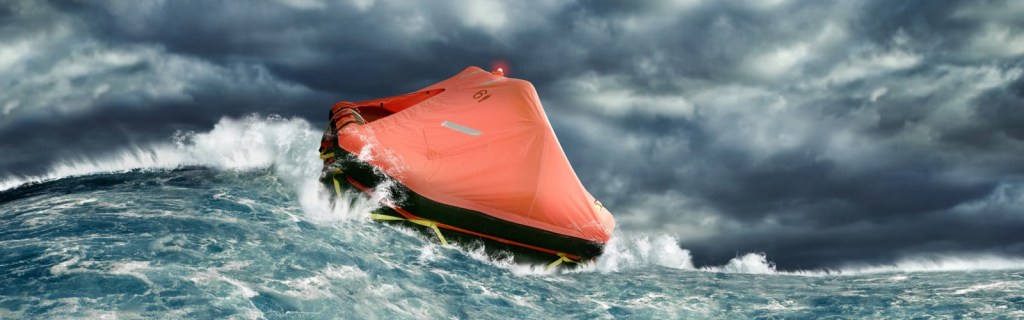
First week of March. I flew in on BA to London Heathrow in the evening and went to the same arrival routine as usually. Bus to Woking, Southwestern train to Portsmouth, ferry over to Gosport. It was a dull, wet, breezy evening. Drizzle and low overcast accompanied me when I walked through downtown Gosport, which does not look like the coziest and safest place in the UK. But anyway I had to head to my BB location where I arrived at 10 pm. Nice place, friendly people, decoration 1970ties, mattress maybe older. But at the end a bed to sleep and to rest. Next morning I met some crew mates and Geoff was so nice taking me with his car. Sailing? No, not at all. A day of sea survival waited for us in a school with a pool. That was the reason for the Saturday morning drill.
First we had classes and learned a lot about handling firework, choosing search pattern for MoB, rations of sweat water, how to operate a life raft and what to do when you are in it. Not new for me as I had to go through a week of sea survival every year when I was a jet pilot. But still I learned a lot and new things too like before you go into a life raft put on as much clothes as you can, drink and eat. Once you are in take a wee, don’t eat and don’t drink for 24 hours.
This was all accompanied by these charming tea brakes that the Brits celebrate so much. No lesson started without a cup of tea and each lesson ended with one.
After the theory pool time. First life vest drills and swimming exercises all in a cozy environment of 30 degrees air and water temp. We were in “yellow fish skin” overall. It looked we came from Mars. But the subject was serious. How to get into a life raft, how to make it dry, how to help others in and how to upright it when it capsized. It is good to learn it.

I had much tougher memories from sea survival back from my pilot days. There was the Dilbert Dunker, an ejection seat set in a framed cockpit on rails. We were in full flight suit harnessed up in the set. On an explosive noise we ran down to the water surface, hitting it hard, rolling 180 degrees upside down. Once on a standstill we had to eject the canopy, unstrap and climb out of the cage. Visibility zero, million of bubbles, close to panic.

And worse than that was the outdoor experience. Fully dressed up, life raft under the bud in a container hanging on the gallows waiting for the eject. We were dumped into the 4 degree Celsius water (because I always was called in winter to sea survival) dragged by the tug boat. And on command we had to get out the parachute harness without ripping the balls off. Than alone in the North Sea. Activate your raft, get in before the hands are frozen stiff and dry the raft. For all or nothing. I recall how the cold creeped up the dry suit. How it grabbed every muscle, how it took possession of my skin, the bones and joints. And than the sound a jet jockey only appreciated in a situation of rescue, the chopper arrived. I was almost unable to get out of the raft. Only an hour and well dressed and in training exhaustion felt unbelievable. How would it be in a real Desaster?
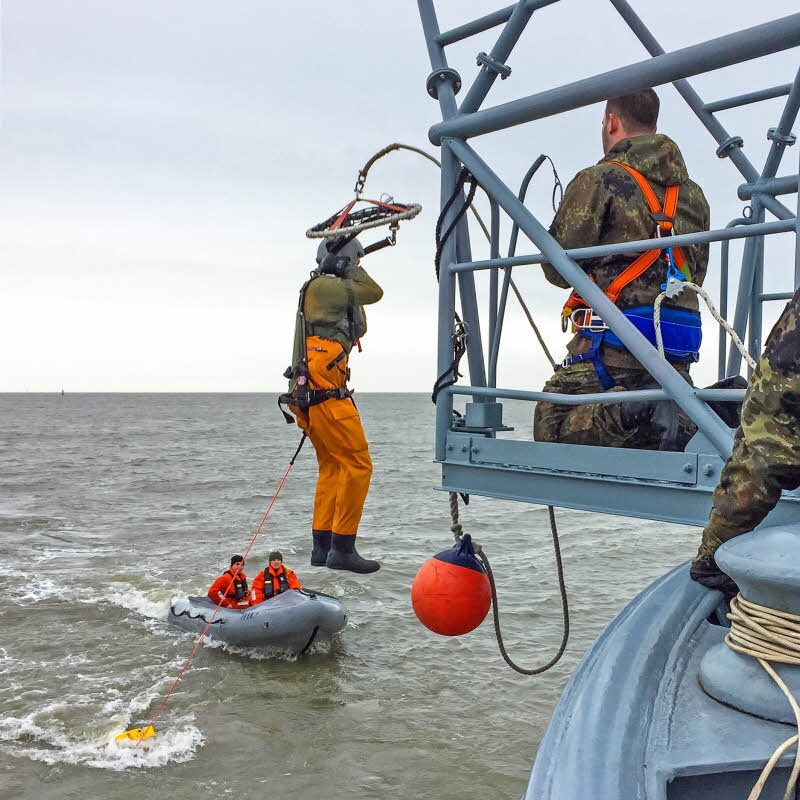
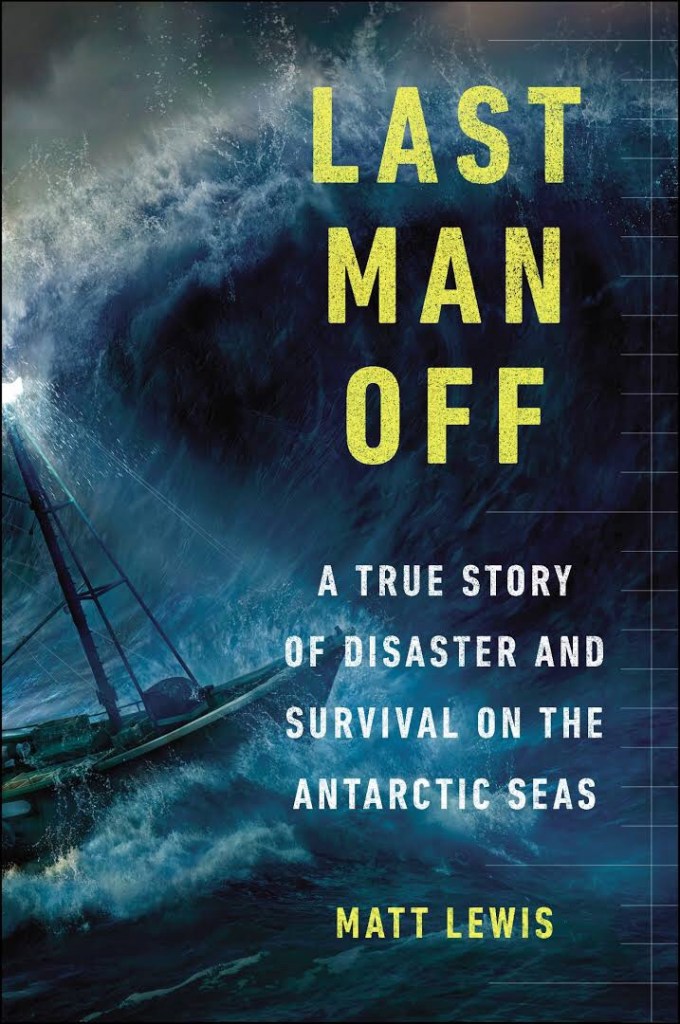
Why am I telling these old war stories. I appreciate Clipper does this sea survival although it is unlikely the boat will sink. It is this awareness of what it could look like. And it encourages us all to keep the boat above water by all means. It is the safest place. A life raft is not, only a very last option. I recommend the read “Last Man off”. It is a true story and can give you a glimpse how a catastrophic emergency at sea can end. No, not for us. We are trained to stay safe.
But enough about Desasters. We all were prepped and we all were looking for one thing, go sailing. The weather was to my taste, breezy, not violent but a challenge for a Newbee crew. Big surprise, our skipper was Mark again, Kym our first mate and another surprise, Ines was also again part of this crew. I met Chris for the first time who should become a Clipper friend of mine as many others. We were 11 in total. So we started the same routine as always. Briefing of what will happen the week, life vest check, safety brief, dinner (bangers and mash for a change, Mark loves bangers and mash), knot practice and finally walk to the pub. After the pub we crawled into our bunks and the “concert” could start. Snoring and getting up for a wee. The only warm place on board was our sleeping bag. L2 training was one more time on the Clipper 68, bit old fashion boat but it does its job. Next morning breakfast a la UK cuisine – bacon rolls, toast, Marmaid and jam.
After that we dressed up and did the deck and safety zone brief. The wind picked up and guess what, harbor drills. Too much energy in the atmosphere. Too much wind. Ok, understand. We need to bring people on the same level first. We hoisted the Stay, we did winch drills and we did man over board tied to the pontoon. On a Clipper „cruiser“ this is different from what we trained on regular yachts. We Lauch a rescue swimmer into the sea to swim to the casualty. Makes a ton of sense when you see the free board of a Clipper. And in high seas it is dangerous to come too close to the boat. The casualty could get smashed hard when the boat rolls in the sea. So we normally deploy a swimmer. Early end of the day! Harbor drills? It is like in jet flying. You never die in simulators. At the end of an early day we walked to the pub for a couple of easy pints. You start thinking that life on a Clipper yacht is good.
Early morning next morning. The wind eased down to 25 knots with casual gusts of 30 knots. We went out there and wanted to start the drills. So hoist the main first. Make sure you “milk” the reefing lines. Do let them go loose. We should understand quickly why. For those who never were on a boat like this but the weight of the main is roughly 700kg. This means that even with a bear like Chris and a muscle man like John you can sweat it only up half of the mast, maximum. And than a long exhausting grind with one coffee grinder brings it up to the mast. During that time we are heading dead into the wind the sail is flogging and the „Milkman“ (the guy who is supposed to keep the reefing lines tight) let them go. They were flogging with even more violence. Jesus! Mark was yelling and screaming and the „Milkman“ stared into his headlights. After about 15 seconds „Bang“ And Reef 1 went. The sheer violence had melted the line in the disk at the end of the boom. Great happiness broke out. „Hold main, pull Reef 2 you idiots before that one goes”. Marks temper rose and he was mad. Reef 1, important gear! Gone. Once Reff 2 was tight and the main up, “Debriefing”. And we learned all, really all about milking, hoisting, flogging, command and control. Yes sailing is about experience, painful experience at times.
We stayed in the Solent. Winds went up to 32knots in gusts up to 45 knots. We sailed Reef two and staysail. Endless drills of tacks. “Ready to tack! Runner back”. Nothing. “Ruuuuuuuunner baaaaack!!! Guys the runner”. Ok. “Noooo, you idiot don’t pull the fucking trycing line! God dammed open the jammer, yes the jammer in lee, pull the yellow line, faster!!! come on we are not wheel chairing. The sand bank is coming closer”. OK. “Helm to weather”. Silence followed by a band like from a shotgun. “No, who told you to toss the windward runner. Do you want to blow my mast, my mast?“ and „remember guard position!!!!!“ „Lee ho“ and silence. Nothing. „You guys, where is guard, windward runner, grind, grind, grind“. Ok and what was next? „Debriefing!“. And we learned all about position, individual tasks, the moments to act and the moments not to. After 30 tacks there was still the question what a trycing line is, which winch takes the runner and how to dress the self tailor. Life is hard. Compared to the 17th century easy though. Skip never whipped ones back. I also paid my tolls „Joe god dammed go slower and do not try to be everywhere“. And his best call „Joe – fingers, fingers, fingers”.
It takes long days to become a sailor. I had 40 plus years learning it. Most of my crew had 1 week Level 1. And in Level 2 thumb screws we’re tightened. Progress, we needed progress. After 11 hours on the water our first gybing exercise, a nightmare with Clipper because we have to dress Foreguys when the boom reaches the see fence outwards. More lines. We had three of the guys, three Foreguys. No it is not a competition burger chain to the Five Guys burgers. It is a safety line from the end of the boom to the bow. We have a port, a center and a starboard one. Two needs to be attached to the boom. And when gybing you ease the two Foreguys against the tightening main. Once the main is pinned (dead center) you undo both Foreguys, run the center one to the other side, attach the two to the boom and pull the Foreguys against the easing main sheet. First attempt was hilarious. Three times four is twelve. It was chaos. What Foreguys? The read one? Chute but I like the blue one!!! Bowline upside down? Not sure how that works. Mark lost his cool after the third attempt. He desperately needed cool aid! So we headed into East Cowes and took berth on the outside of the harbor. We cleaned the boat, tidied the deck, ate supper and ……. headed for cool aid into the pub. And as always when “sailors” sit together in the warmth without foulies and no gusts, no swell, no rain showers and no cold – stories over stories. Life is good – sailing is awesome – no troubles, we made it here.
Next day, more wind. No way to go to the channel. Forecast was 60 knots out there. Nothing for us. We headed out into the „calm“, the Solent. Grey day, we hoisted the main, one reef (we repaired it over night) and stay sail. But dammed, Bob lost his balance and went overboard. “Man over Board!” “Helm to weather, keep the sheets” „Stay ready to John Wayne the Staysail halyard” “Drop the Stay!!!” “Where is the pointer???” “ Where is the marker?” „Where is the swimmer, I want the swimmer on deck now“ „ Mayday, Mayday,Mayday“ „God where is the swimmer, this is not a fashion show, your friend Bob is freezing his ass off and he is dying“ „Lookout where is Bob, I want commands, loud and clear“ „Foredeck no no no that is the wrong halyard. You must take the other one“ 16 minutes, 17 minutes, 18 minutes chicken farm. „swimmer on deck!“ „ where is is helmet, Jesus guys“ 22 minutes, 23 minutes. „swimmer overboard, casualty 10m off the bow, 8, 6, 4, 2, contact. Swimmer under water!!! Ok he lost Bob“ 25 minutes, 26 minutes. „Guys Listen Focus, do one job one only, stop yelling, act, control the maneuver“. We pulled Bob out of the pond after 28 minutes and – he was dead – under cooled and dead. One Vaterunser, ready for the bag. And it was us who went in panic without clear commands and not prepared. The debrief was long and painful.
And what did we do. We tacked, we gybed, we had lunch, we reefed, we tacked and gybed. The wind had picked up, 38 knots. And bloody Bob went over the side untethered. But this time 16 minutes. Skip was happy. We had the main up two reefs and hoisted the stay sail. We wanted to exercise more tacks. 40 knots. The boat went backwards. Too much current, not enough sail. „Hoist the Yankeeeeeeeeeee, I need power“. But some of the guys just got scared. Some did not hear the commands properly. It was very difficult. Mark yelled, the Mate screamed, we yelled and still could not here a thing. No clear command. The engine went on. „Bring the Stay down, that is it guys“. We went into Gosport and guess what, we had a very, very long debrief. We learned all about commands, how to relay, finger signals, single source of a commander, feed back loops and fast execution especially when it gets critical.
It was not the end of the „cruise“. When we approached Portsmouth harbor in the middle of the main shipping lane we lost a fender. „Whaaaaaaat, I cannot believe it!!! I cannot take it“ and „Portsmouth harbor master, Portsmouth harbor master, this is CV6, lost a fender in the shipping lane, going to maneuver for a pick up” “CV6, are you serious? Get it done and report back”. “You guys make me look like an idiot. I hope Sir Robert is not on the radio. I cannot believe it – get it out of the water!!!!! Fast!!!! There is a ferry approaching”. Chris and John grabbed my legs and I went overboard heads down going for it. I was able to hook it in the first attempt “We got it” “You better do! And for f… sake hold on to it now” “Skip, fastest MoB of the day! High five?“ „I high five you in a minute! Idiots. You made me look like a beginner yachty who is out for the first time!!!!“ and „Harbor Master, CV6 situation cleared“ „CV6 from Harbor Master good for you and next time careful! Over and out“. Happy days! No word until the tidy up was finished. The debrief of the day was long and painful and painful and long. There was a systematic lack of Synchronisation for sure. We decided to test synchronizing at the Pub. Maybe we could lift the blockage. Yes, sailing is all about learning and experience. Challenging road. Everybody needs to be agile, alert, listening, understanding. Otherwise you operate in havoc. But the good thing, after a pint skip found his smile back. Eventful night.
I can only remember two more things. One, my good leather boot disintegrated the day before. It meant sailing with wet feet till the end of the training course. One crew mate though sold me his sealskin watertight Sox. Really good, thank you.
Second was my debrief. Mark had two comments. Number one „Joerg, fingers, fingers, fingers“ Number two „ Joerg, you must slow down. You must not try to do everything. Teach others, help others and for gods sake slow down.“ Ready for Level 3 training on Clipper 70. Yes! Gosport, you will see me again!
 Joe Sails
Joe – I love your story so far! – BZ – Hajo
LikeLike